5 Best Turtle Wax Car Polishers for Paint Correction (2026)
Compare the best turtle wax car polisher options for paint correction. See key specs, pros, cons and who each polishing compound suits before you buy.
 By Miles Sinclair
Updated November 25, 2026
 By Miles Sinclair
Updated November 2026
Shopping for a turtle wax car polisher usually comes down to one job: getting oxidation, light swirls and dull paint back to a clean, reflective finish. This guide compares five Turtle Wax polishing and rubbing compounds that owners commonly use for that work. The selection criteria were cut level (how aggressively the product removes defects), formulation type (paste versus liquid), product size, the surfaces each label names, and the feedback patterns owners tend to report. Nothing here is based on personal testing or lab results, so treat the notes as a research-based summary rather than a hands-on review.
Our top picks at a glance
- 1TOP CHOICEBest overallTurtle Wax Hybrid Solutions Ceramic Graphene Paste Wax, 5.5 oz. (Pack of 1)View on Amazon
- 2
 TOP CHOICEBest for light swirlsTurtle Wax T241AC Polishing Compound, 10.5 oz, Paste WhiteView on Amazon
- 3
 TOP CHOICEBest for final finishingTurtle Wax T-417 Premium Grade Clean Cut Polishing Compound, 18 Oz.View on Amazon
- 4
 Best for heavy oxidationTurtle Wax T230A 10.5 Oz Rubbing Compound Heavy Duty CleanerView on Amazon
- 5
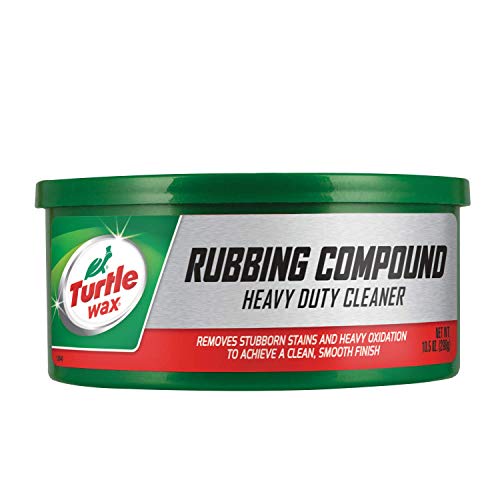 Best budget pickTurtle Wax T-230A Rubbing Compound & Heavy Duty Cleaner, 10.5 Fl Oz.View on Amazon
Our Top Picks
Before the individual listings, here is a side-by-side view. Read the cut level as a rough guide: rubbing compounds sit at the aggressive end, polishing compounds in the middle, and finishing or wax-type products at the gentle end.
| Product | Best for | Key feature |
|---|---|---|
| Turtle Wax Hybrid Solutions Ceramic Graphene Paste Wax | Gloss and protection after correction | Ceramic graphene paste wax with water beading |
| Turtle Wax T241AC Polishing Compound | Light swirls and haze | Paste polishing compound in a 10.5 oz tub |
| Turtle Wax T-417 Premium Grade Clean Cut Polishing Compound | Finishing after heavier work | Clean cut formula in an 18 oz container |
| Turtle Wax T230A Rubbing Compound Heavy Duty Cleaner | Heavy oxidation and faded paint | Heavy duty rubbing compound |
| Turtle Wax T-230A Rubbing Compound & Heavy Duty Cleaner | Budget-minded restoration of oxidized finishes | Rubbing compound for oxidized finishes, 10.5 fl oz |
Turtle Wax Hybrid Solutions Ceramic Graphene Paste Wax, 5.5 oz. (Pack of 1)
Turtle Wax Hybrid Solutions Ceramic Graphene Paste Wax, 5.5 oz. (Pack of 1) | High Gloss Shine Car Wax, Ceramic Coating Paint Protection & Extreme Water Beading, Safe for Glass, Wheels, Trim & More
Best for: Gloss and protection after correction
This is the protection step rather than a cutting compound. It suits owners who have already corrected their paint and want a durable, glossy layer on top. Listing copy describes it as safe for glass, wheels and trim as well as paint.
Key specs
- Size: 5.5 oz
- Formula: ceramic graphene paste wax
- Stated benefits: high gloss shine, paint protection, extreme water beading
Pros
- Designed as a finishing layer that adds gloss after polishing
- Listing names multiple surfaces, including glass, wheels and trim
- Paste format is easy to control in small sections
Cons
- It does not remove swirls or oxidation, so it cannot replace a compound
- The small 5.5 oz size may run short on a full-size vehicle
Bottom line: A good pick for owners who want shine and water beading after correction. It is not the right choice if your main problem is deep defects.
View on AmazonTurtle Wax T241AC Polishing Compound, 10.5 oz, Paste White
Turtle Wax T241AC Polishing Compound, 10.5 oz, Paste White
Best for: Light swirls and haze
This paste polishing compound is aimed at owners dealing with fine swirl marks, light haze and mild dullness rather than deep scratches. It fits a moderate, step-by-step correction routine.
Key specs
- Size: 10.5 oz
- Format: paste
- Type: polishing compound
Pros
- Mid-level cut suits light defects without the aggression of a rubbing compound
- Paste form stays where you apply it on a pad
- Larger 10.5 oz tub covers several panels
Cons
- Will not fully remove deep scratches or heavy oxidation
- Usually needs a follow-up step with a finishing product for the best gloss
Bottom line: Best for owners whose paint needs refreshing rather than rebuilding. Pick this if you want a controlled, middle-of-the-road polish.
View on AmazonTurtle Wax T-417 Premium Grade Clean Cut Polishing Compound, 18 Oz.
Turtle Wax T-417 Premium Grade Clean Cut Polishing Compound – 18 Oz.
Best for: Finishing after heavier work
The “clean cut” wording in the listing points to a compound meant to cut defects while leaving a relatively clean surface. The 18 oz size makes it practical for repeated use on larger vehicles.
Key specs
- Size: 18 oz
- Type: premium grade polishing compound
- Described as: clean cut formula
Pros
- Large container suits full-vehicle work
- Clean cut description suggests less residue to wipe away
- Works as a step between heavier compounds and protection
Cons
- Still a cutting product, so test a small area first to confirm the cut level suits your paint
- Requires careful wiping and inspection to avoid leaving haze
Bottom line: A sensible choice for owners who want a larger supply of compound for multi-panel work. Best used after a heavier cut, when you want a cleaner finish.
View on AmazonTurtle Wax T230A 10.5 Oz Rubbing Compound Heavy Duty Cleaner
Turtle Wax T230A 10.5 Oz Rubbing Compound Heavy Duty Cleaner
Best for: Heavy oxidation and faded paint
Rubbing compounds sit at the aggressive end of the range. This one targets chalky, oxidized or badly faded finishes that a polishing compound will not handle.
Key specs
- Size: 10.5 oz
- Type: rubbing compound and heavy duty cleaner
Pros
- Stronger cut for heavy oxidation and faded paint
- Compact size is easy to store and handle
- Works as a first step before polishing and protection
Cons
- Aggressive enough to remove clear coat if overworked, so use light pressure
- Always needs a polish and a protective wax afterward
Bottom line: The right tool for badly oxidized paint. Use it sparingly and follow with a finer compound to restore gloss.
View on AmazonTurtle Wax T-230A Rubbing Compound & Heavy Duty Cleaner, 10.5 Fl Oz.
Turtle Wax T-230A Rubbing Compound & Heavy Duty Cleaner – 10.5 Fl Oz. | Car Care Products, Rubbing Compounds, Paint Restoration, Automotive Polishes, Dark Reddish Brown, oxidized finishes
Best for: Budget-minded restoration of oxidized finishes
This is the same family of rubbing compound as the T230A listing above, described for oxidized finishes and paint restoration. It suits owners who want a cutting product for one or two problem panels without buying a full correction kit.
Key specs
- Size: 10.5 fl oz
- Type: rubbing compound and heavy duty cleaner
- Described for: oxidized finishes and paint restoration
Pros
- Targeted at oxidized finishes, a common older-paint problem
- Smaller size limits waste on spot repairs
- Fits a basic restoration routine with a polish afterward
Cons
- Small volume may not cover a full vehicle
- Same aggressive cut as other rubbing compounds, so it needs careful technique
Bottom line: A practical option for spot restoration on a limited budget. For full-car work, a larger container will be more economical to use.
View on AmazonBuying Guide
Cut level
The cut level tells you how much paint the product removes. Rubbing compounds remove the most, polishing compounds sit in the middle, and finishing or wax products remove little or nothing. Start with the least aggressive product that solves your problem, then step up only if needed. Check the paint thickness if you can, since clear coat is finite.
Good picks for this: Turtle Wax T241AC Polishing Compound, Turtle Wax T230A Rubbing Compound Heavy Duty Cleaner
Formulation: paste versus liquid
Paste compounds hold their place on a pad and are easy to control in small sections. Liquid formulas spread more quickly and can suit larger areas, though they may need more frequent pad cleaning. Choose the format that matches your working style and the size of the job.
Good picks for this: Turtle Wax T241AC Polishing Compound, Turtle Wax Hybrid Solutions Ceramic Graphene Paste Wax
Container size and coverage
Compare the volume to the size of your vehicle and how many correction passes you expect. Small containers suit spot work and single panels. Larger containers reduce the need for re-purchasing during a full-car job. The right size depends on how many panels you plan to treat.
Good picks for this: Turtle Wax T-417 Premium Grade Clean Cut Polishing Compound, Turtle Wax T-230A Rubbing Compound & Heavy Duty Cleaner
Surfaces the product is labeled for
Some listings name only paint, while others mention glass, wheels or trim. Check the label before using a product on plastic trim, chrome or glass, since a paint compound may not be designed for those materials. Follow the manufacturer’s stated surfaces.
Good picks for this: Turtle Wax Hybrid Solutions Ceramic Graphene Paste Wax
Defect severity
Match the product to the defect. Light swirls and haze usually respond to a polish. Chalky, oxidized or faded paint typically needs a rubbing compound first. Deep scratches that catch a fingernail are often beyond what any compound can fix. Be realistic about what a bottle can do.
Good picks for this: Turtle Wax T230A Rubbing Compound Heavy Duty Cleaner, Turtle Wax T-230A Rubbing Compound & Heavy Duty Cleaner
Protection after correction
Compounds remove defects but leave the paint bare. A protective layer such as a paste wax or ceramic-based product helps maintain gloss and water beading. Plan on applying protection once correction is complete, not instead of it.
Good picks for this: Turtle Wax Hybrid Solutions Ceramic Graphene Paste Wax, Turtle Wax T-417 Premium Grade Clean Cut Polishing Compound
Care and technique
Use clean microfiber pads and towels, work in small sections and wipe residue before it dries. Keep the paint cool and out of direct sun. Manufacturers generally advise testing on a hidden area first. Stop if you see the paint getting thinner or the clear coat turning dull.
Good picks for this: Turtle Wax T241AC Polishing Compound, Turtle Wax T-417 Premium Grade Clean Cut Polishing Compound
FAQ
What is a turtle wax car polisher?
The phrase usually refers to Turtle Wax polishing and rubbing compounds used with a dual-action or rotary polisher, or by hand with a pad. The compound does the cutting or refining, and the machine or pad provides the motion.
Do I need a machine polisher to use these compounds?
No. You can apply most compounds by hand with a foam or microfiber pad, though it takes more effort. A dual-action polisher is more consistent and is the common choice for larger areas.
Which should I use first, a rubbing compound or a polishing compound?
Start with the least aggressive product that works. Use a polish for light swirls and haze. Move to a rubbing compound only for heavy oxidation, then follow it with a polish to refine the finish.
Will a compound remove scratches completely?
Light and surface scratches often reduce noticeably. Deep scratches that catch a fingernail usually cannot be removed with a bottle of compound and may need professional attention.
Do I need to wax after using a compound?
Yes. Compounds remove a thin layer of paint and leave the surface bare. A protective product helps maintain gloss and water beading and protects the corrected finish.
Can I use these products on glass, trim and wheels?
Check each label. Some listings name glass, wheels and trim, while paint compounds may not be designed for those surfaces. Follow the manufacturer’s directions for each material.
How often should I polish my car?
Polish only when the paint needs it, since every compound removes some clear coat. Routine washing and protection will keep paint in good condition between corrections. For specific frequency advice, consult the product label or a professional detailer.
Conclusion
For most owners, the best turtle wax car polisher depends on the problem. For protection and gloss after correction, the Ceramic Graphene Paste Wax fits best. For light swirls, the T241AC polishing compound is the controlled middle choice. For larger finishing jobs, the T-417 clean cut compound offers volume. For heavy oxidation, the T230A rubbing compound is the stronger tool, and the smaller T-230A listing suits spot restoration on a budget. Use the lightest effective product, work carefully, and protect the paint once you are done.
For related reading, see Turtle Wax Car Wax: 5 Best Picks Compared for Shine and Protection for protection options, Wax vs Polish Car: Which Should You Choose? (2026) to understand the difference between the two steps, and Wax or Ceramic Coating (2026): Which Is Better for Your Car? if you are weighing longer-lasting protection.
Sources
- Consumer guidance on safe handling of automotive and household chemicals (energy.gov)
- Product safety information and recall notices for consumer chemical products (cpsc.gov)
Before you buy: helpful guides
About Miles Sinclair
Miles Sinclair is part of our editorial team and reviews and edits our car wash & detailing tools guides, checking product details against manufacturer specifications and owner feedback.
About the author
Miles Sinclair writes reviews and buying guides for Carwash Distributors.