Foam Applicator Pad for Car Wax Review: Features and Performance
Reviewing the FONAROLL 6-pack foam applicator pad for car wax. See specs, pros and cons, who should buy it, and how it compares to Meguiar's and PSLER alternati
 By Miles Sinclair
Updated November 8, 2026
 By Miles Sinclair
Updated November 2026
A foam applicator pad for car wax is one of the cheapest upgrades a home detailer can make, and it is also one of the easiest to get wrong. The right pad spreads a thin, even layer of wax without leaving streaks, haze or dried product in the seams. The wrong one soaks up too much product, shreds after a few uses or scratches the paint. This review looks at the FONAROLL Microfiber Wax Applicator Pads, a 6-pack of 5-inch foam pads marketed for waxing, buffing and detail polishing. It suits hobbyists who wax by hand a few times a year and want a set of disposable-feeling pads for multiple coats. It is less suited to people who want a single premium pad for machine work or who need a pad built to last through dozens of heavy sessions.
FONAROLL Microfiber Wax Applicator Pads, Car Wax Applicator, Buffing & Detail Polishing Foam Pads for Car Cleaning and Fine Polishing (5" Diameter, 6 Pack)…
Product Overview
The FONAROLL set is a multipack of foam applicators sold under the name Microfiber Wax Applicator Pads. The listing describes them as car wax applicators suitable for buffing, detail polishing and general car cleaning. Each pad is around 5 inches across, which is a practical size for hand application on hoods, doors and roof panels, and large enough to cover a reasonable section of panel per pass without requiring much arm movement.
Foam applicators in this category usually fall into two families. Open-cell foam is more absorbent and tends to hold more liquid wax; closed-cell foam releases product more evenly and wipes off residue more cleanly. Pads sold for waxing typically aim for a dense, fine-celled structure so that wax spreads thinly. The FONAROLL listing points toward this kind of pad, but the exact foam construction is not fully detailed in the product name, so anyone who needs a specific cell structure should check the listing’s product description before buying. If you want more background, see Best Car Polishing Pads.
Because the set comes in a six-pack, the main appeal is replacement. Pads loaded with wax, dirt or polish residue are usually better discarded or washed than reused for a different product, and having spares on hand makes it easier to keep a clean pad for each coat or each product type.
Key Features & Specifications
The table below lists only the specifications stated in the product name or that are reasonably inferred from it. Details not confirmed in the listing are marked as such.
| Specification | Detail |
|---|---|
| Brand | FONAROLL |
| Product type | Foam wax applicator pad |
| Pad diameter | 5 inches |
| Quantity | 6 pads per pack |
| Intended use | Car wax application, buffing, detail polishing, general car cleaning |
| Application method | Hand application (listing does not specify machine compatibility) |
| Foam density and cell structure | Not confirmed in the product name; check listing details |
| Backing or hook-and-loop | Not confirmed in the product name; check listing details |
Anyone planning to use the pads on a dual-action polisher should verify backing type and mounting compatibility, since the product name does not confirm this.
Pros & Cons
Pros
- Six pads per pack gives room to use a fresh pad for each coat or product change.
- The 5-inch size is practical for hand waxing full body panels in reasonable passes.
- Multipack format makes it easy to replace pads that have picked up grit or residue.
- Designed for a range of car care tasks, including wax, polish and general cleaning.
- Suited to a light, even product layer when used with restraint.
Cons
- Foam construction details are not spelled out in the product name, so buyers must check the listing for density.
- Machine compatibility is not confirmed, which limits use with a rotary or dual-action polisher.
- Budget foam pads generally wear faster than premium options under frequent, heavy use.
- Owners who prefer a specific feel, such as a very firm or very soft pad, may need to try more than one style.
Performance Analysis
Performance in a foam applicator depends on three things: how the foam holds and releases product, how it handles pressure, and how it sheds or retains debris. Because this review is research-based rather than drawn from hands-on testing, the analysis below draws on the stated specifications and on patterns commonly reported by owners of budget foam applicator sets.
Product release is the first consideration. Owners of multipack foam applicators typically report that a few pumps of wax on the pad are enough for a single hood or roof, and that over-loading leads to heavy residue that is hard to buff off. A pad that releases wax evenly is more valuable than one that holds a lot of it. The FONAROLL set is positioned for thin application, which fits this pattern, but the actual release characteristics will depend on the foam density, which the listing does not confirm.
Pressure handling is the second factor. Foam that is too soft compresses unevenly and can leave wax ridges. Foam that is too firm can skip across curved surfaces. A 5-inch pad is a sensible size for hand work because it conforms to most body panels without requiring excessive force. Owners of similar budget pads often report that consistent, light pressure with overlapping passes produces the most even result, regardless of pad quality.
Debris handling matters most for longevity. Foam that picks up grit from the surface can scratch paint on the next pass. This is why many detailers keep a separate set of pads for wax and clean, dry pads for buffing off. Having six pads in the pack makes this workflow easier. Cleaning pads between sessions with mild soap and water and letting them dry fully before storage extends their useful life, although owners generally report that foam pads degrade over time regardless of care.
Overall, the FONAROLL set appears suited to occasional to regular hand waxing, provided the user applies thin coats, rotates pads and replaces them when the foam shows wear, tearing or contamination that cannot be cleaned out.
Who Should Buy This Product?
This set makes sense for owners who wax by hand a few times a year, detailers who want disposable spares for client work and beginners who want to learn with pads that are not expensive to replace. It is a good fit for anyone who has been using a single old pad for every product and wants a clean pad for each coat.
It is less suitable for enthusiasts who machine polish regularly, since machine compatibility is not confirmed in the product name. It also may not satisfy buyers looking for a long-lived, premium foam pad with a documented high-density construction. Those users should compare the alternatives in the Buying Guide below.
Buying Guide
When choosing a foam applicator pad for car wax, start with the work you do most. Hand waxing favors soft, flexible foam that conforms to curves. Machine polishing needs a pad with a backing plate or hook-and-loop attachment that matches your tool, and a firmer foam that can handle heat and speed. Buyers who want a single pad for light hand work can get by with any reasonable foam; those who want the best finish on a daily driver may benefit from a pad with a documented fine cell structure.
Check the pad diameter against your panels. Five inches covers most hoods and doors in a few passes. Four-inch pads are easier to maneuver around mirrors, badges and door handles. Confirm how many pads you get, since a six-pack and a twenty-four-pack serve very different needs.
Look for a listing that states foam density or cell structure. If it does not, you are guessing about how much product the pad will hold and how it will release it. Finally, plan a cleaning routine. Foam pads that are washed, dried flat and stored away from dust last longer than pads that are left wet or tossed into a bucket.
Several well-known alternatives are worth comparing. Meguiar’s 4-inch foam applicator pads are a familiar option for hand waxing and tire dressing, with a smaller size that suits tighter areas.
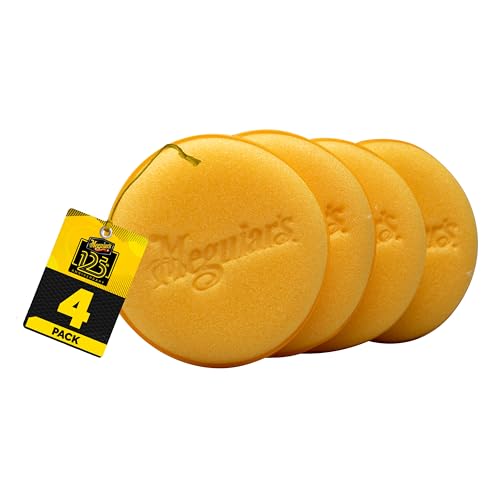
Meguiar's 4" Foam Applicator Pads, 4 Pack | Ultra-Soft Hand Applicators ,Tight-Cell Foam Construction , Smooth Application of Waxes, Polishes, Tire Dressing, Protectants
PSLER offers a larger pack of 4-inch foam applicators, which may suit users who go through pads quickly or want to keep several on hand for different products.

PSLER 24PCS Car Wax Applicator Pad – 4 Inch Foam Applicator Pads | High Density Foam Pads for Waxing, Tire Shine, Car Polishing, Ultra Soft Reusable Sponges, Scratch Repair & Wheel Dressing
For a deeper look at wax types and how they affect applicator choice, see Wax vs Polish Car: Which Should You Choose? (2026) and Car Wax by Hand: A Step-by-Step Guide to a Glossy Finish. Readers who plan to strip old layers first may find Wax Remover for Car: A Step-by-Step Guide to Stripping Old Wax useful, and those using a buffer should read How to Wax a Car with Buffer: A Step-by-Step Guide for Beginners.
FAQ
Can I use a foam applicator pad for car wax with a dual-action polisher?
Only if the pad’s backing and attachment method match your machine. The FONAROLL listing does not confirm machine compatibility, so check the product details or contact the seller before attempting machine use.
How much wax should I put on a foam pad?
A few small dabs, roughly the size of a pea each, are usually enough for one panel. Spread the product thinly and let it haze before buffing. Loading the pad heavily leaves residue that is harder to remove.
How do I clean a foam applicator pad?
Rinse the pad in lukewarm water with a mild soap, squeeze gently without twisting, and air dry flat. Do not wring it hard, and do not use hot water or harsh solvents that can break down the foam.
How long do foam applicator pads last?
Lifespan depends on frequency of use, cleaning habits and the product types applied. Owners generally report replacing pads when the foam tears, hardens, holds odor or leaves streaks that cannot be fixed by washing.
Can I use one pad for both wax and polish?
It is better to use separate pads. Residue from one product can contaminate the other, and polish is often more abrasive than wax, so mixing them can leave haze or swirl marks on paint.
Are foam applicators safe for all paint finishes?
Foam applicators are generally considered gentle for wax application, but no pad is risk-free if it picks up grit. Inspect and clean pads before use, and test a small hidden area first if you are unsure about a delicate or older finish. For paint concerns, consult a professional detailer.
Do I need a separate pad for each panel?
Not necessarily, but switching pads between high-contrast or dirty areas, such as lower panels versus hoods, reduces the chance of carrying grit across the finish.
What size foam applicator is best for beginners?
A 4 to 5 inch pad is a practical starting point. It is large enough to cover panels efficiently and small enough to control around trim, emblems and door edges.
Final Verdict
The FONAROLL Microfiber Wax Applicator Pads are a practical, low-commitment option for hand waxing and light detail work. The six-pack format, 5-inch size and multipurpose positioning make them useful for owners who want fresh pads for each coat and a simple, repeatable routine. Their main limitations are the unconfirmed foam density, the unconfirmed machine compatibility and the general wear expectations for budget foam. Buyers who wax by hand and value spares will likely find them sufficient. Machine polishers, or anyone wanting a documented premium construction, should compare the Meguiar’s and PSLER alternatives before deciding.
View on AmazonRelated reading
About Miles Sinclair
Miles Sinclair is part of our editorial team and reviews and edits our car wash & detailing tools guides, checking product details against manufacturer specifications and owner feedback.
About the author
Miles Sinclair writes reviews and buying guides for Carwash Distributors.