5 Best Clay Bar Detailing Spray Options for Smooth Paint (2026)
Compare the best clay bar detailing spray options for smooth, contaminant-free paint. See which lubricant suits your need, with pros, cons and buying tips.
 By Caleb Morgan
Updated November 22, 2026
 By Caleb Morgan
Updated November 2026
A clay bar detailing spray is the lubricant you spread over paint before running a clay bar across it, and the right one makes the difference between a smooth finish and scratched clear coat. This list compares five well-known options based on product listings, brand reputation and common owner feedback. The criteria are slickness, residue left behind, whether the formula suits clay use specifically, and how well it fits a wax or sealant step afterward.
Our top picks at a glance
- 1TOP CHOICEBest overallKoch-Chemie Clay Spray – 500 millilitersView on Amazon
- 2
 TOP CHOICEBest for wax-friendly prepNanoskin GLIDE Silicone Free Spray Detailer 16 ozView on Amazon
- 3
 TOP CHOICEBest for a multi-use detailerAdam's Detail Spray – 16 fl. ozView on Amazon
- 4
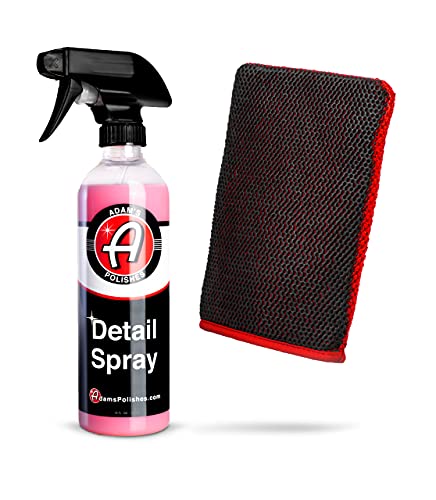 Best for a clay mitt setupAdam's Clay Mitt Combo – Detail Spray Clay LubricantView on Amazon
- 5
 Best for a full starter kitCar Clay Bars Auto Detailing 4 Pack 400g Kit with Lubricant TabletsView on Amazon
Our Top Picks
Quick Comparison
| Product | Best for | Key feature |
|---|---|---|
| Koch-Chemie Clay Spray | Overall clay lubrication | Silicone-oil-free, low residue |
| Adam’s Detail Spray | Multi-use detailing | Adds shine and gloss |
| Nanoskin GLIDE Spray Detailer | Wax-friendly prep | Leaves no residue before sealant |
| Adam’s Clay Mitt Combo | Mitt-based clay use | Pairs with medium-grade clay mitt |
| Car Clay Bars Auto Detailing 4 Pack Kit | Complete starter setup | Includes clay, spray and towel |
Koch-Chemie Clay Spray – 500 milliliters
Koch-Chemie – Clay Spray – 500 milliliters | Lubricant Spray for Clay Bar or Clay Towel; Silicone-Oil-Free; Specialized Formula Helps Preserve Longevity; Low-Residue
Best for: Overall clay lubrication
This suits owners who want a dedicated clay lubricant without extra features to sort through. Its listing describes it as silicone-oil-free and low-residue, which matters if the paint will be waxed or coated later.
Pros
- Formulated specifically for clay bar or clay towel use
- Low-residue finish helps with follow-up products
Cons
- Single-purpose, so it will not double as a general detailer
Adam’s Detail Spray – 16 fl. oz
Adam's Detail Spray (16 fl. oz) – Quick Waterless Car Detailer | Polisher Clay Bar & Car Wax Booster | Adds Shine & Gloss Depth
Best for: Multi-use detailing
This fits someone who wants one bottle for clay work and quick touch-ups between washes. The brand positions it as a waterless detailer that also boosts wax shine.
Pros
- Works as a clay lubricant and a waterless detailer
- Listing highlights added shine and gloss depth
Cons
- Versatility means it may not be the slickest option for heavy contamination
Nanoskin GLIDE Silicone Free Spray Detailer 16 oz
Nanoskin GLIDE Silicone Free Spray Detailer 16 oz – Use with Autoscrub/Clay Bar After Car Wash | Leaves No Residue Before Wax Sealant Coating | Automotive, Home, Garage, DIY & More | Concentrated
Best for: Wax-friendly prep
This suits owners who plan to apply wax or sealant right after claying and want to avoid residue interfering with bonding. The listing emphasizes that it leaves no residue before sealant or coating.
Pros
- Designed to leave no residue before wax or sealant
- Concentrated formula, so one bottle goes a long way
Cons
- Concentrate needs dilution, which adds a setup step
Adam’s Clay Mitt Combo – Detail Spray Clay Lubricant
Adam's Clay Mitt Combo – Detail Spray Clay Lubricant for Medium Grade Clay for Car Detailing – Glove Quickly Removes Debris from Your Paint, Glass, Wheels, & More
Best for: Mitt-based clay use
This is for owners who prefer a clay mitt over a traditional clay bar and want the spray and mitt sold together. The mitt is listed in medium grade, which suits most general contamination.
Pros
- Spray and mitt are matched as a set
- Medium-grade mitt handles common paint debris
Cons
- Mitt format may feel less precise on tight panel edges
Car Clay Bars Auto Detailing 4 Pack 400g Kit with Lubricant Tablets
Car Clay Bars Auto Detailing 4 Pack 400g(4x100g) and Clay bar Lubricant Tablets 10 Pack(1pcs=16 oz) Clay bar kit, Spray Bottle and Microfiber Towel for Car Detailing
Best for: Complete starter setup
This suits a first-time detailer who wants clay bars, lubricant, a spray bottle and a towel in one purchase. The lubricant comes as tablets that are mixed with water, which is a different approach from a ready-to-use spray.
Pros
- Includes clay, lubricant, spray bottle and microfiber towel
- Four clay bars give room for several full-vehicle sessions
Cons
- Tablet lubricant requires mixing, so it is less convenient than a ready spray
Buying Guide
Lubricity
Clay only works smoothly when the surface stays wet and slick. Look for a spray that keeps the clay gliding without drying out, since dry clay can mar paint.
Residue
Any leftover film can interfere with wax or ceramic coating bonding. Formulas described as low-residue or silicone-free are generally the safer choice if you plan a protection step afterward.
Format
Ready-to-use sprays save setup time, while concentrates and tablets stretch further but need mixing. Choose based on how often you plan to clay.
Kit versus standalone
If you already own clay, a standalone spray is usually enough. Beginners may prefer a bundled kit that includes the matching clay and towels.
Good picks for this: Koch-Chemie Clay Spray and Nanoskin GLIDE Spray Detailer
FAQ
Can I use regular car wash soap instead of a clay bar detailing spray?
Car wash soap is not designed to lubricate a clay bar, and it can strip wax and leave the surface dry or grabby. A dedicated clay lubricant keeps the clay gliding and helps lift contaminants safely off the paint.
Do I need to wax or seal the paint after claying?
Yes, in most cases. Clay removes the protective layer on the surface, so applying a wax, sealant or coating afterward restores protection and gloss. Choosing a spray that leaves little residue makes this step easier.
Is a clay bar safe for all paint types?
Clay is generally considered safe for factory clear coats when used with plenty of lubrication and light pressure. Freshly painted or very soft finishes should be checked first, and it is wise to test a small area before working across the whole vehicle.
How often should I use a clay bar and spray?
Most owners clay only when the paint feels rough after washing, typically a couple of times a year. Over-claying can thin the clear coat, so use it when the surface actually needs it.
What is the difference between a kit and a standalone spray?
A kit usually bundles clay, lubricant and towels so everything works together right out of the box. A standalone spray lets you keep using a clay you already own or switch to a different clay grade later.
Can I use clay lubricant on glass and wheels too?
Many clay lubricants can be used on glass, wheels and other hard surfaces, which makes them handy for general decontamination. Check the label for each product, as some are formulated mainly for painted surfaces.
Conclusion
For most drivers who want a reliable, low-residue lubricant that works well with clay and leads cleanly into waxing, the Koch-Chemie Clay Spray is a strong first choice. If you plan to wax or seal right after claying, the Nanoskin GLIDE Spray Detailer suits that workflow especially well.
Owners who want one bottle for quick detailing as well as clay work will get the most value from Adam’s Detail Spray, while those starting from scratch may prefer a full kit like the Car Clay Bars 4 Pack. Choose based on whether you need a single spray or a complete setup.
Related reading
- What Is Clay Bar Detailing? A Step-by-Step Guide to Smooth Paint
- Clay Bar for Detailing: A Step-by-Step Guide to Smooth Paint
- Clay Bar for Car Detailing: A Step-by-Step Guide to Smooth Paint
About Caleb Morgan
Caleb Morgan is part of our editorial team and reviews and edits our car wash & detailing tools guides, checking product details against manufacturer specifications and owner feedback.
About the author
Caleb Morgan writes reviews and buying guides for Carwash Distributors.