Ceramic Coating for Headers: 7 Best Picks Compared (2026)
Comparing 7 ceramic coating for headers options by heat rating, application method and owner feedback, so you can protect exhaust parts with the right pick.
 By Lauren Holland
Updated November 8, 2026
 By Lauren Holland
Updated November 2026
Shopping for a ceramic coating for headers means balancing three things: how hot the coating is rated to run, how it is applied, and how well it holds up to the cycle of heating and cooling that exhaust parts go through every time the engine starts and stops. This list is built on published specifications, brand reputation and the patterns owners commonly report in reviews, with a focus on heat tolerance, finish, ease of application and coverage. Some of these products are paint-style high-temperature coatings and others are ceramic sealants for car bodywork, so we group them by what they actually do.
Our top picks at a glance
- 1TOP CHOICEBest overallVHT Flameproof Coating, Flat, Black, 11 ozView on Amazon
- 2
 TOP CHOICEBest for internal header passagesEastwood High Temperature Internal Exhaust Coating with Extension NozzleView on Amazon
- 3
 TOP CHOICEBest for a silicone-based finishDesign Engineering High-Temperature Silicone Coating SprayView on Amazon
- 4
 Best for multi-part projectsEastwood High Temperature Resistant Silver Exhaust Manifold Coating, 2 PackView on Amazon
- 5
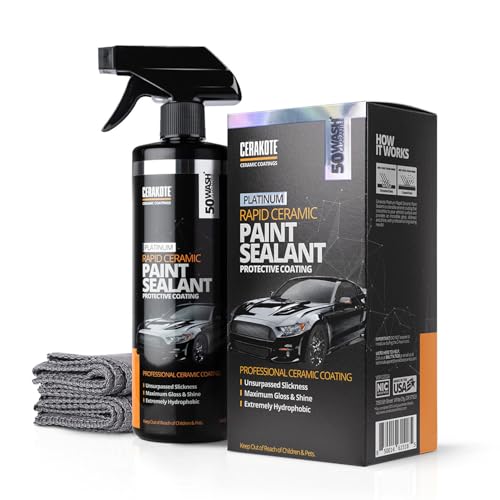 Best for painted exteriorsCERAKOTE Rapid Ceramic Paint SealantView on Amazon
- 6
 Best budget pickCLEAN. Ceramic Coating 3-Year High-Gloss & Extreme Hydrophobics 30mlView on Amazon
- 7
 Best for body-panel protection20H Graphene Ceramic Coating for Cars, 60mL KitView on Amazon
Our Top Picks
| Product | Best for | Key feature |
|---|---|---|
| VHT Flameproof Coating, Flat, Black, 11 oz | Most header and manifold restoration jobs | High-heat flat black finish in an aerosol can |
| Eastwood High Temperature Internal Exhaust Coating with Extension Nozzle | Coating the inside of headers and pipes | Extension nozzle for reaching internal surfaces |
| Design Engineering High-Temperature Silicone Coating Spray | Silicone-based heat protection | Flexible silicone film for heat shielding |
| Eastwood High Temperature Resistant Silver Exhaust Manifold Coating, 2 Pack | Larger jobs needing extra product | Silver finish sold as a two-can set |
| CERAKOTE Rapid Ceramic Paint Sealant | Protecting painted car surfaces near heat sources | Ceramic sealant with a spray-on application |
| CLEAN. Ceramic Coating 3-Year High-Gloss & Extreme Hydrophobics 30ml | Small budget-conscious detailing projects | Hydrophobic, high-gloss ceramic finish |
| 20H Graphene Ceramic Coating for Cars, 60mL Kit | Body panels and paint protection | Graphene-ceramic blend with a larger kit size |
VHT Flameproof Coating, Flat, Black, 11 oz
VHT Flameproof Coating, Flat, Black, 11 oz
Best for: Restoring and protecting headers, manifolds and exhaust components with a flat, heat-resistant black finish.
This is a good fit for owners who want a traditional high-temperature paint look on steel or cast exhaust parts. It is designed for use on hot surfaces and suits DIY restorations where a matte, factory-style appearance matters.
Key specs:
- Flat black finish
- 11 oz aerosol can
- Formulated as a high-temperature flameproof coating
Pros:
- Flat finish suits period-correct restorations
- Aerosol format is easy to apply in thin, even coats
- Widely available for repeat projects
Cons:
- Requires a clean, bare surface and multiple thin coats for best results
- Flat finish shows fingerprints and handling marks more readily
Bottom line: Best for owners who want a durable, traditional matte black finish on headers and manifolds at the heart of a restoration.
View on AmazonEastwood High Temperature Internal Exhaust Coating with Extension Nozzle
Eastwood High Temperature Internal Exhaust Coating with Extension Nozzle
Best for: Coating the internal passages of headers and exhaust pipes where a standard spray cannot reach.
Owners working on tubular headers or long exhaust runs often find that the outside is easy to coat but the inside is not. An extension nozzle makes it possible to direct coating deeper into tubes, which suits builders focused on heat control inside the system.
Key specs:
- Includes an extension nozzle for internal application
- Designed for high-temperature exhaust use
Pros:
- Extension nozzle reaches inside tubes and runners
- Targets a hard-to-coat area that most sprays miss
- Useful for both headers and longer pipe sections
Cons:
- Internal coating needs careful ventilation and drying time
- Less practical for simple external-only jobs
Bottom line: Best for builders who want heat-resistant coating on the inside of tubular headers and pipes, not just the outside.
View on AmazonDesign Engineering High-Temperature Silicone Coating Spray
Design Engineering High-Temperature Silicone Coating Spray
Best for: Silicone-based heat protection on exhaust components and nearby heat-exposed parts.
Silicone-based heat coatings are often chosen when flexibility and a softer, rubbery film are preferred over a hard paint layer. They suit owners who want to shield components rather than create a hard ceramic-look finish.
Key specs:
- Silicone-based high-temperature spray
- Aerosol application
Pros:
- Silicone film can remain flexible under heat cycling
- Simple aerosol application
- Useful for heat shielding around sensitive parts
Cons:
- Silicone finishes are typically less hard and glossy than ceramic paints
- Surface prep matters more for adhesion
Bottom line: A sensible pick for owners who want silicone-based heat protection rather than a hard ceramic paint.
View on AmazonEastwood High Temperature Resistant Silver Exhaust Manifold Coating, 2 Pack
Eastwood High Temperature Resistant Silver Exhaust Maniflod Coating Aerosol 11.75 oz | 2 Pack
Best for: Full manifold or multi-header jobs that need more coating than a single can provides.
Two cans in one set make sense for owners coating a complete exhaust manifold set, or those who want a spare on hand for touch-ups. The silver finish is a common choice for a period or race look.
Key specs:
- Silver high-temperature exhaust manifold coating
- 11.75 oz cans, sold as a 2-pack
Pros:
- Two cans cover larger jobs or future touch-ups
- Silver finish is a popular exhaust appearance
- Designed specifically for manifold-style parts
Cons:
- Silver finishes can show heat discoloration over time if the surface is not properly prepped
- Two-can sets are more than needed for a single small part
Bottom line: Best for multi-part projects or owners who want a spare can on hand for maintenance.
View on AmazonCERAKOTE Rapid Ceramic Paint Sealant
CERAKOTE® Rapid Ceramic Paint Sealant, Ceramic Coating for Cars, 14 oz | Hydrophobic Spray Wax Alternative, 50-Wash Gloss and Slickness, Safe on All Paint Colors and Clear Coat
Best for: Protecting painted car surfaces, including areas near exhaust heat, with a ceramic sealant rather than a high-heat header paint.
This is a ceramic sealant for car paint, not a header coating. It fits owners who want to protect bodywork, wheels or painted panels and are looking for ceramic protection in general. It is included here for readers who may have confused the two categories.
Key specs:
- 14 oz spray bottle
- Ceramic paint sealant formulation for vehicle paint
Pros:
- Spray-on application is quick for panel work
- Suitable for a range of paint colors
- Useful for protecting painted areas around the engine bay
Cons:
- Not designed for exhaust surfaces or high-temperature use
- Does not replace a heat-rated header coating
Bottom line: Pick this for paint protection, not for headers. Choose a true high-temperature coating if the part gets hot.
View on AmazonCLEAN. Ceramic Coating 3-Year High-Gloss & Extreme Hydrophobics 30ml
CLEAN. Ceramic Coating 3-Year High-Gloss & Extreme Hydrophobics 30ml
Best for: Small, budget-conscious ceramic detailing projects on paint and trim.
A small bottle of ceramic coating suits spot protection, trim work or a first try at ceramic products. Like the sealant above, it is aimed at vehicle paint and surfaces, not exhaust headers.
Key specs:
- 30 ml bottle
- Marketed as a 3-year, high-gloss ceramic coating
Pros:
- Small size is easy to try on a limited area
- High-gloss, hydrophobic finish on paint
- Good entry point for a first ceramic product
Cons:
- Small volume covers limited area
- Not rated for exhaust or header heat
Bottom line: A budget-friendly option for detailing paint and trim, not a header solution.
View on Amazon20H Graphene Ceramic Coating for Cars, 60mL Kit
20H Graphene Ceramic Coating for Cars, 60mL Professional Car Ceramic Coating Kit, Hydrophobic Graphene Coating for Cars, High Gloss Auto Detailing Coat, Scratch & UV Resistant Protection
Best for: Body-panel and paint protection on a full vehicle, with a larger ceramic kit.
This is a graphene-ceramic blend sold as a car paint coating. It suits owners protecting a full vehicle exterior rather than engine components. The larger kit size makes it practical for multiple panels.
Key specs:
- 60 mL kit
- Graphene-ceramic car paint coating
Pros:
- Kit format covers more panels than a single small bottle
- Designed for paint gloss and water-beading
- Useful for whole-car detailing
Cons:
- Not intended for exhaust or header heat
- Requires careful surface prep and application
Bottom line: Best for full-body paint protection. Pair it with a true high-temperature coating for headers.
View on AmazonBuying Guide
Heat rating and temperature range
Header coatings are judged first by how much heat they can take. Manufacturers typically list a maximum operating temperature on the label or data sheet, and the number matters more than the marketing. Exhaust manifolds and headers can run very hot under load, so look for a stated high-temperature rating before anything else. Paint sealants and car-body ceramics are not made for this and should not be used on exhaust surfaces.
Good picks for this: VHT Flameproof Coating, Flat, Black; Eastwood High Temperature Resistant Silver Exhaust Manifold Coating
Coating type: paint, silicone or ceramic
High-temperature exhaust coatings come in several forms. Heat-resistant paints form a hard, matte or satin film. Silicone-based sprays form a more flexible layer. Ceramic-branded products for cars are usually paint sealants that do not belong on exhaust parts. Knowing which family a product belongs to prevents the most common mistake: using a body-panel product where a heat-rated coating is needed.
Good picks for this: Design Engineering High-Temperature Silicone Coating Spray; VHT Flameproof Coating
Application method and reach
Aerosol cans are the standard format for header coating. For tubular headers, the inside surfaces are often the hard part. Extension nozzles let you direct coating deeper into tubes, which matters where the internal passages are part of the heat-management plan. Check whether the product includes a nozzle or whether you will need to buy one separately.
Good picks for this: Eastwood High Temperature Internal Exhaust Coating with Extension Nozzle
Size and project scope
Estimate how many parts you are coating before choosing a can size. A single header set may need more than one can, and most aerosol cans are applied in several thin coats. A two-pack or larger kit makes sense for full manifold jobs, while a small bottle is enough for spot work. Buying too little means finishing the job with a second batch that may not match in color or sheen.
Good picks for this: Eastwood High Temperature Resistant Silver Exhaust Manifold Coating, 2 Pack; 20H Graphene Ceramic Coating for Cars, 60mL Kit
Finish and appearance
Flat black is the traditional look for headers. Silver is common for a racing or period style. Matte and satin finishes hide small imperfections better than high-gloss ones, while gloss finishes show every fingerprint. Decide the look before you buy, because switching finishes later means stripping and recoating.
Good picks for this: VHT Flameproof Coating, Flat, Black; Eastwood High Temperature Resistant Silver Exhaust Manifold Coating
Surface preparation and cure time
Most failures of exhaust coatings come from poor preparation, not the product. Surfaces should be clean, dry and free of oil, rust and old coating. Many header coatings call for a light scuff, degreaser wipe and a warm-up cycle before full heat is applied. Follow the cure time and temperature guidance printed on the can, since rushing the cure can leave a soft film that flakes early.
Good picks for this: VHT Flameproof Coating, Flat, Black; Eastwood High Temperature Internal Exhaust Coating with Extension Nozzle
Durability and heat cycling
Headers expand and contract every time the engine runs and cools. A coating that stays flexible or adheres well through heat cycling lasts longer. Silicone-based coatings are often described as more flexible, while hard paints can crack if applied too thick. Owners commonly report that thin, even coats outperform thick ones for longevity.
Good picks for this: Design Engineering High-Temperature Silicone Coating Spray; VHT Flameproof Coating, Flat, Black
FAQ
Can I use a regular ceramic car coating on headers?
No. Ceramic paint sealants and car-body coatings are designed for vehicle paint and glass, not for the extreme heat of exhaust components. Use a product that is explicitly rated for high-temperature exhaust use.
How hot can a header coating get?
Maximum temperatures vary by product and are listed by the manufacturer. Always check the data sheet or label for the stated operating range, and do not exceed it.
Do I need to clean headers before coating?
Yes. Surfaces should be clean, dry and free of oil, grease, rust and old coating. Proper preparation is one of the most important factors in how long a header coating lasts.
How many coats should I apply?
Most high-temperature aerosol coatings are applied in several thin coats rather than one heavy coat. Thin coats reduce the risk of runs and cracking. Follow the instructions printed on the can for the specific product.
Is silicone or ceramic better for exhaust heat?
It depends on the goal. Silicone-based coatings tend to be more flexible, while heat-rated paints form a harder film. Neither is universally better; choose based on the look you want and the heat exposure of the part.
Should I cure a header coating before driving?
Yes. Most manufacturers recommend a curing process, often involving controlled heating, before the coating is fully exposed to engine heat. Follow the cure instructions on your product.
Can I coat the inside of my headers?
Some products include extension nozzles or are specifically designed for internal use. Internal coating requires careful ventilation and drying time, so follow the product’s guidance closely.
Conclusion
For most header and manifold jobs, a true high-temperature coating is the right starting point. VHT Flameproof Coating suits owners who want a traditional flat black finish, while the Eastwood internal coating with extension nozzle is the practical choice for tubular headers that need coverage inside. Silicone-based sprays suit owners who prefer flexibility, and the silver two-pack fits larger manifold projects. The CERAKOTE sealant, CLEAN. ceramic coating and 20H graphene kit are paint-protection products, so use them on bodywork and not on exhaust components. Always confirm the stated heat rating before you begin.
Sources
- Information on vehicle emissions systems and exhaust component performance (epa.gov)
- Vehicle safety guidance related to exhaust and under-hood heat (nhtsa.gov)
- Technical standards and papers on automotive coatings and exhaust materials
Related reading
- Ceramic Coating for Exhaust: 7 Best Picks for Headers and Pipes (2026)
- Exhaust Manifold Ceramic Coating Compared: 7 Best Picks (2026)
- DIY Ceramic Coating for Cars: 9 Best Kits Compared (2026)
- Ceramic Coating on Windshield: 5 Best Picks Compared (2026)
About Lauren Holland
Lauren Holland is part of our editorial team and reviews and edits our car wash & detailing tools guides, checking product details against manufacturer specifications and owner feedback.
About the author
Lauren Holland writes reviews and buying guides for Carwash Distributors.